

Female Veterans Transformation Project

Female Veterans Transformation Project

Project Summary:

The Female Veterans Transformation Project (FVTP) seeks to transform service provision for female veterans through the production of a toolkit for use by the statutory, charity and commercial sector. It is a tri-service (the Royal Navy, the British Army, and the Royal Air Force), UK-wide, three year programme funded by the Armed Forces Covenant Fund Trust and NHS England. Our Senior Research Fellow, Dr Hannah West, worked as a Senior Programme Manager for the project prior to joining Anglia Ruskin University and continued to provide support to the project in a consultancy capacity until March 2025. This reinforced a longstanding relationship between the Centre for Military Women’s Research as a critical friend throughout the lifetime of the programme. Links to the project’s outputs are below:
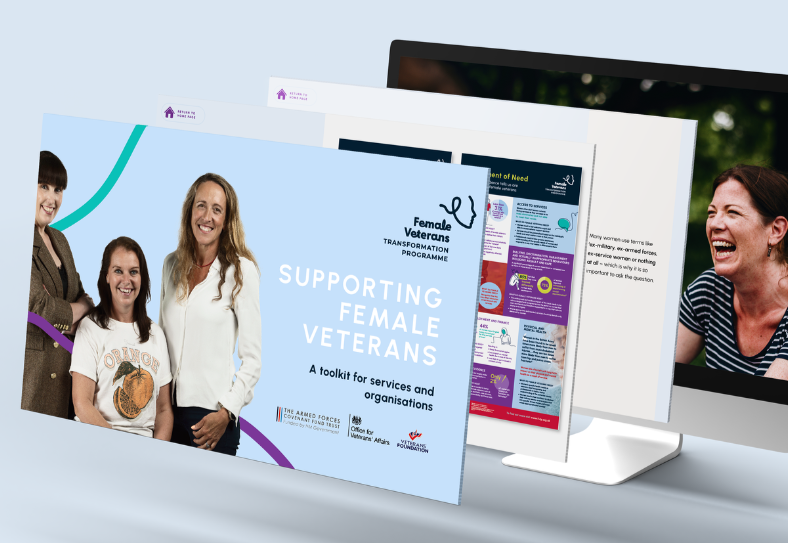
Female Veterans Transformation Project toolkit and details of the launch

Blogpost from Hannah West

Podcast: Listen in to this podcast reflecting on the Female Veterans Transformation Programme – how it came about, what it has achieved and why it matters.

The podcast brings together Dr Lauren Godier, Director of the Centre for Military Women’s Research; Dr Hannah West, Senior Research Fellow at the Centre of Excellence for Equity in Uniformed Public Services; Liza Jarvis, Programme Lead for the Female Veterans Transformation Programme (FVTP) and Stacey Denyer, Communications and Engagement Officer for the FVTP; and is hosted by Ash Pervical-Borley, BBC New Generation Thinker, 2025.

Female veterans’ physical healthcare needs and support preferences

Project summary:

Little is known about UK female veterans’ physical healthcare needs and support preferences. To address this gap, CMWR led a collaborative research project with four partner organisations, King’s Centre for Military Health Research, the Royal British Legion, the Veterans’ Trauma Network at Imperial College London, and the Defence Medical Welfare Service, using a mixed-methods, experience-based co-design approach funded by the Government Office for Veterans’ Affairs.

The research found that women veterans experience a distinct physical health profile compared with both male veterans and civilian women. Qualitative interviews revealed that many attributed chronic pain, injuries, and “wear and tear” directly to unsuitable, male-oriented equipment and training during service, with these physical health impacts often compounded by adverse childhood experiences and difficult in-service experiences, including military sexual trauma. Once in civilian life, women veterans reported challenges including difficulties transferring military medical records, low awareness of veteran-specific services, and healthcare professionals lacking understanding of women’s specific needs. Military culture also shaped help-seeking long after service ended, with many women reluctant to ask for support due to a perception that illness signified weakness, or a sense that they weren’t “worthy” of care compared to others.

Project outputs:

Full report

Briefing note

Journal article: Long-term physical health conditions among UK female veterans: a UK Biobank cohort study comparing male veterans and female civilians | BMJ Open

We Also Served: The health and well-being of female veterans in the UK

Project summary:

The Cobseo Female Veteran Cluster Group, supported by NHS England, commissioned this scoping study to map the existing evidence base, identify critical research gaps, and set out a framework for prioritising future research and support for the health and well-being of female veterans in the UK. The study combined a scoping review of 50 UK papers, evidence from international Five Eyes nations, 13 subject matter expert interviews, and two stakeholder workshops with female veterans and support organisations.

The research found that women veterans face a distinctive set of challenges across their service and post-service lives. The study also revealed substantial gaps in UK evidence around female veterans’ finances, housing, employment, and social relationships, alongside a tendency in existing research to treat women veterans as a single homogenous group rather than recognising differences across service branch, rank, era, and personal circumstances. These findings informed a prioritised framework of recommendations, including tailoring services around the term “ex-servicewomen” rather than “veteran,” embedding female peer support ambassadors, and commissioning urgent research into the health impacts of sexual harassment and assault during service.

Project outputs:

Military Wives Choirs: Access, incentives, and barriers to recruitment

Project Summary:

In collaboration with the Military Wives Choirs (MWC) and the Cambridge Institute for Music Therapy Research (CIMTR) at Anglia Ruskin University, this project seeks to identify barriers and incentives to joining a Military Wives Choir for women in the military community. 

Within this project we surveyed current and past choir members about their experiences, perceptions and challenges associated with joining and being part of a choir, and how eligible individuals might be encouraged to join. We are currently interviewing a portion of these women to better understand their experiences. The purpose of this project is to improve experience, access and recruitment to the Military Wives Choirs for eligible women in the military community.

To find out more about the Military Wives Choirs, please head to their website.

Project Output:

You can read the report below.

Open Arms report (PDF).

Female veterans’ experience of government and charities

Project summary:

This project set out to build an in-depth understanding of how women veterans experience government and charity provision, alongside their broader experiences in military and civilian life. Funded by the Office for Veterans’ Affairs, the research drew on interviews with 85 women who had served in the UK Armed Forces, informing 30 key recommendations to improve statutory and charitable support.

Women veterans reported feeling unrecognised and underrepresented, both within the military itself and across civilian and veteran support services, which directly shaped how (and whether) they sought help in civilian life. Male dominance was a recurring theme, with veteran organisations perceived as male-branded and male-targeted in their imagery, staffing, and governance, leaving many women feeling that these services simply “weren’t for them”. Many participants also didn’t identify with the term “veteran”, closely tied to a public perception of veterans as older, combat-experienced men, which meant they didn’t recognise available services as relevant to them. Alongside this, low awareness of existing services, confusion over eligibility, and a lack of understanding of gendered needs among professionals compounded the barriers to access, while gendered experiences during service, including discrimination, sexual harassment, and sexual assault, further increased women’s support needs without a corresponding improvement in service design.

Project outputs:

Project report

Scoping review: Women veterans’ experiences of veteran-specific support services: an international scoping review | BMC Women’s Health | Springer Nature Link

Journal article: UK female veterans’ physical health: perceived impact of military service and experiences of accessing healthcare. Findings of a qualitative study | BMJ Military Health

Meeting the needs of women veterans in mental health services

Project summary:

This project set out to understand women veterans’ mental health needs and their experiences of care, in order to co-design practical guidance for the professionals supporting them. Funded by the National Institute for Health Research, the project was delivered in collaboration with Essex Partnership University NHS Foundation Trust and Salute Her.

The research found that many women veterans don’t identify with the term “veteran”, often viewing it as a male label, which means they don’t feel entitled to access veteran-specific support even when they need it. Compounding this, a lack of awareness of available services, confusion over eligibility, and a perception that veteran-specific provision was designed primarily for men all discouraged women from seeking help, alongside practical barriers such as inconsistent regional provision, long waiting lists, and caring responsibilities. Many participants also described how military cultural narratives around female “weakness” made them reluctant to appear vulnerable, leading some to feel they weren’t “bad enough” to deserve support, while others reported experiences of gender discrimination, sexual violence, or poor previous care that shaped their reluctance to re-engage with services. As a result, women veterans often fall through the gaps between civilian and military mental health provision altogether.